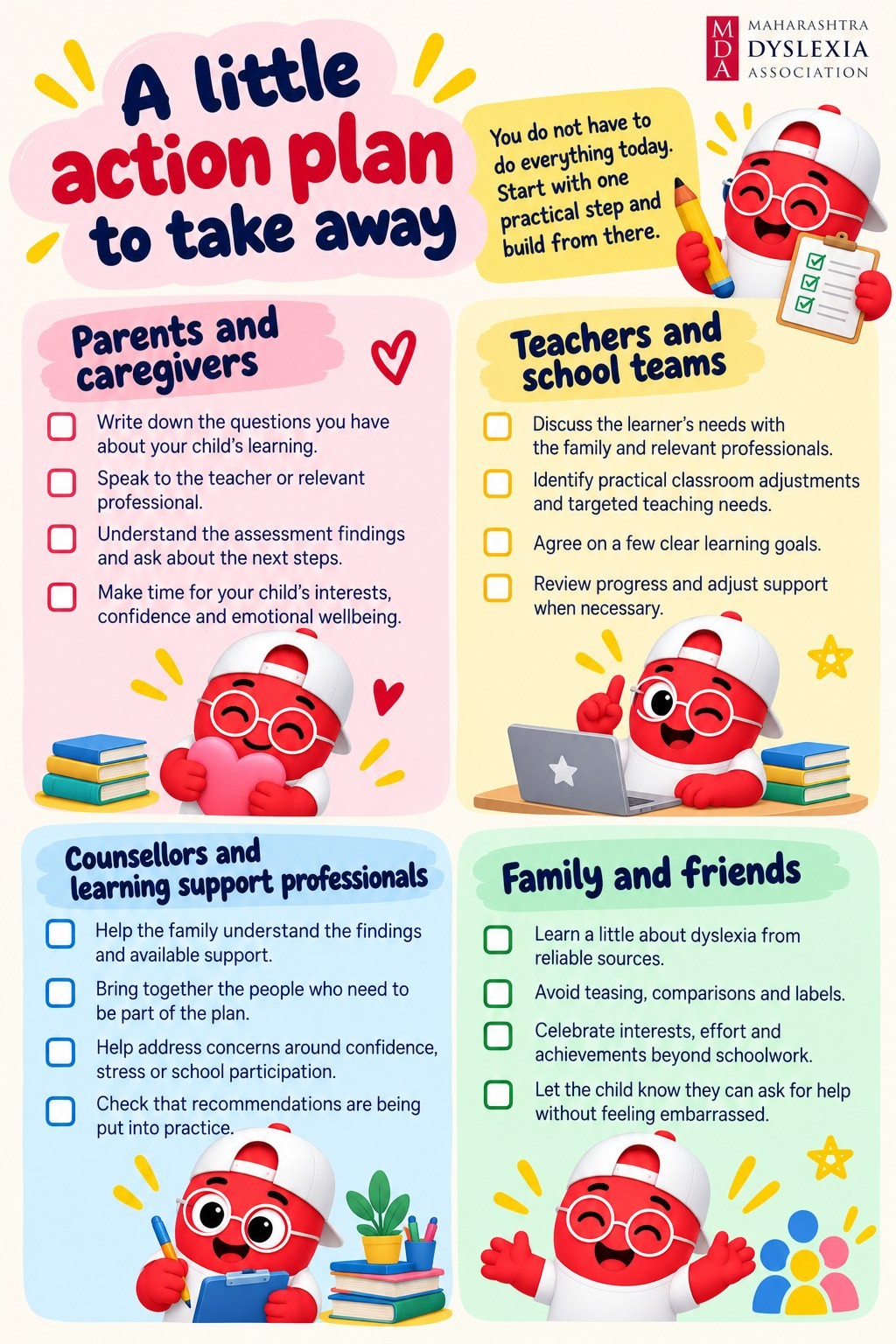
Turning Understanding into Action: Supporting a Child with Dyslexia
You have noticed the struggles, asked questions, and perhaps received an assessment that explains why a child finds reading, spelling or writing difficult. But what happens next?
A diagnosis can bring relief because it helps explain what a child has been experiencing. It can also bring questions. What kind of support does the child need? What should change at school? How can parents help at home? And how can everyone involved work together without making learning feel like a constant struggle?
The important thing to remember is that a diagnosis is not the finish line. It is a starting point for taking meaningful action.
Supporting a child with dyslexia goes beyond identifying the difficulty. It means putting the right learning strategies in place, making classrooms more inclusive, protecting the child's confidence, and helping the people around them understand how they can contribute.
The next steps do not have to happen all at once. They begin with understanding the child's individual needs and turning that understanding into practical, consistent support, at school, at home and beyond.
You have a concern. Who do you speak to first?
You do not need to wait until you have all the answers.
If you are a parent, start with your child's teacher. Share what you have noticed at home and ask what they see in the classroom. If you are a teacher, speak to the parents and share specific examples rather than simply saying that the child is falling behind.
A school counsellor, special educator or learning support professional can also help you work out the next steps.
For example, instead of saying, "She is very weak in English", try explaining what happens: "She understands the story when I read it aloud, but struggles to read unfamiliar words on her own."
That gives everyone something useful to work with.
If the difficulties persist, seek guidance about screening, and a professional assessment where appropriate. Screening can indicate whether a child may need a closer look, while a comprehensive assessment helps build a clearer picture of their learning strengths and challenges. Neither should be replaced by guesswork or a checklist alone.
The Maharashtra Dyslexia Association (MDA) offers parent workshops, counselling and support groups, along with teacher training and school support. These can help families and educators understand learning difficulties and explore ways to respond.
Explore MDA's Parent Workshops and Teacher Workshops.
Got an assessment report? Let's make sense of it.
An assessment report can come with a lot of unfamiliar words, scores and recommendations. It is completely understandable if the first reaction is, "What does all of this actually mean for my child?".
Start by discussing the findings with the professional who conducted the assessment. Ask which reading, spelling or writing skills need support, what the child is already doing well, and what should happen next.
You do not need to understand every technical term immediately. You, however, do need to leave the conversation with a clearer idea of what will help.
Here are a few terms you might come across:
Phonological and Phonemic awareness: The ability to notice and work with the sounds in spoken words. For example, recognizing that cat contains the sounds /k/, /ǎ/ and /t/.
Phonics: Learning how letters and groups of letters connect to sounds.
Decoding: Working out how to read an unfamiliar word by using letter and sound knowledge.
Reading fluency: Reading accurately, at a suitable pace, and with enough ease to focus on meaning.
Structured literacy: An approach to teaching reading and spelling that is explicit, systematic, and carefully sequenced. Skills are taught clearly, practiced, and revisited as learning develops.
These are not labels to memorize. They help explain what a child may be finding difficult and what kind of teaching could help.
MDA's assessment resources describe the different tools that may be used to understand a learner's abilities and difficulties. The assessment process should be appropriate to the individual, including their age and learning needs.
Source: MDA's Assessment Resources and the International Dyslexia Association.
Now comes the important part: turning the findings into a plan
A diagnosis can help explain why certain things have been difficult, but what happens after that?
The next step is to turn the findings into practical support. This usually means looking at two things: helping the child develop the skills they find difficult, and making everyday learning more accessible while those skills develop.
Think of it this way. If a child finds reading difficult, they may need targeted reading instruction. They may also need more time to complete a written test or another way to demonstrate what they know.
Both can matter.
At home: make learning less of a battle
Parents and caregivers do not have to become teachers or therapists. Their role is to create an environment where a child feels safe asking for help, practicing new skills, and making mistakes.
Here are a few things you can try:

One important reminder: avoid comparing siblings, classmates, or even your child's progress today with what they could do last month. Learning takes time, and progress may not look the same for everyone.
MDA offers individual and family counselling, parent workshops, and support groups for families navigating learning difficulties. Reaching out for support is not a sign that you are doing something wrong. It is one way to make the journey less overwhelming.
At school: small changes can make a real difference
A child with dyslexia may understand a lesson, but struggle to show that understanding through reading or writing. This is where teachers can make a difference, both through the way they teach and the way they assess learning.
Start with the recommendations in the assessment report, and work with the family and relevant professionals to decide what is appropriate.
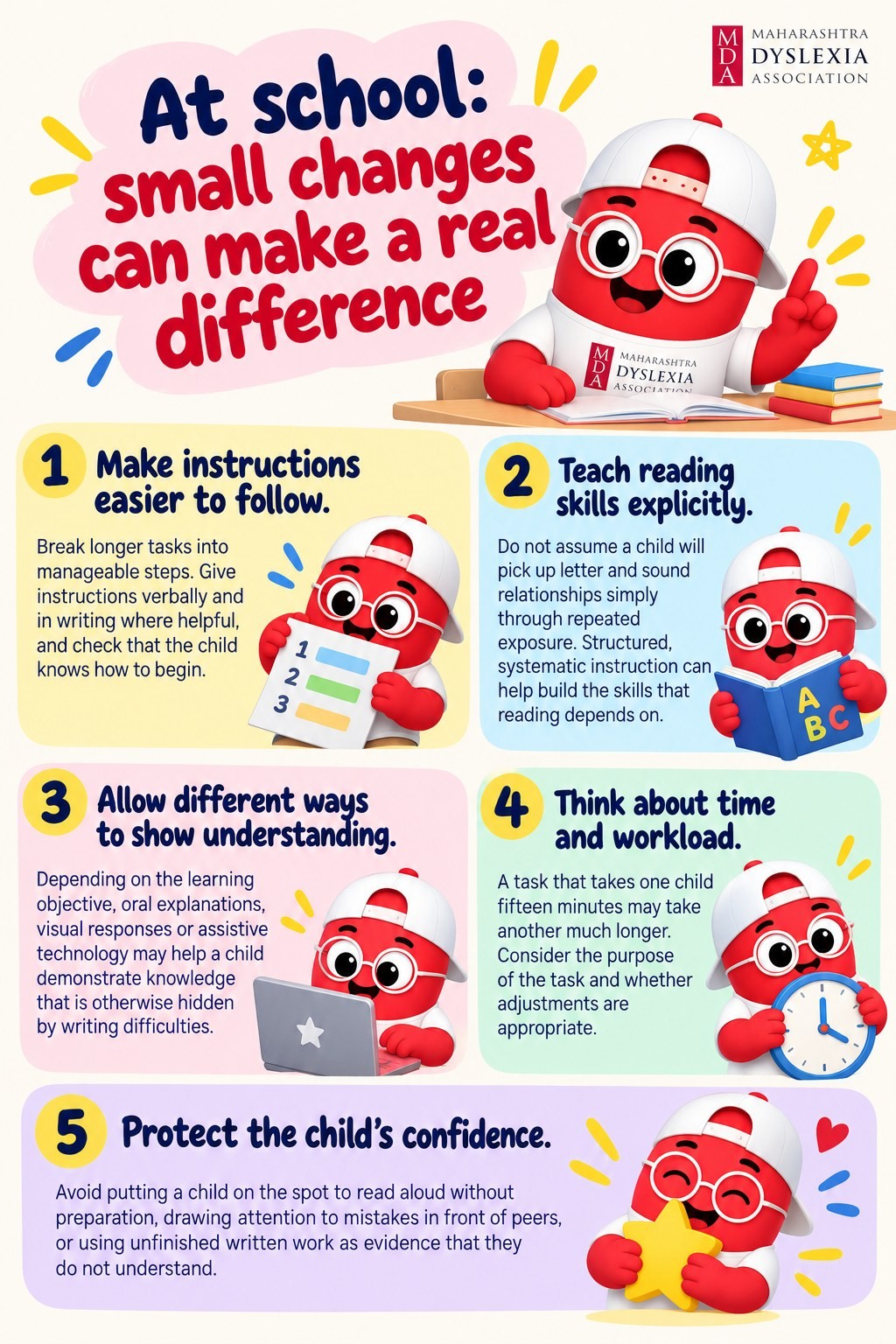
These adjustments are often called accommodations. They change how a child accesses a task or demonstrates learning, rather than automatically changing what they are expected to learn.
An Individualized Education Plan (IEP), where used, can help record a learner's goals, the support they need, and how progress will be reviewed. The exact process and documentation depend on the school and the relevant requirements.
MDA works with schools through teacher training, early identification and intervention strategies, reading instruction for mainstream teachers, and support for learning disability resource rooms.
Source: MDA's Teacher Workshops and MDA in Schools.
What about remedial education?
Sometimes, classroom adjustments alone are not enough. A child may need focused teaching to build reading, spelling and writing skills.
This is where remedial education can help.
Good intervention starts with what the child can do now and builds from there. It does not simply mean giving more worksheets or asking the child to repeat the same task until they get it right.
A structured approach may include working on sound awareness, connecting letters with sounds, reading unfamiliar words, spelling patterns, and building reading fluency. The specific focus depends on the learner's assessment and progress.
Research supports the value of reading intervention. A systematic review and meta-analysis of 53 studies involving 6,053 elementary school students found a positive overall effect of reading interventions on standardized reading outcomes, with an effect size of g = 0.33. The studies varied in their methods and results, so this is not a promise of the same outcome for every child. It does, however, show that targeted instruction can make a meaningful difference.
MDA offers personalized one-to-one remedial sessions that focus on skills such as reading, spelling, writing and handwriting. The frequency and type of support should be considered in relation to the child's needs.
The people around the child matter too
Support is not limited to parents and teachers. Grandparents, siblings, friends and other caregivers all influence how a child feels about learning.
They may not be responsible for teaching reading, but they can help make life feel a little easier.
For family members, this could mean giving a child time to finish what they are saying, listening patiently when they read, or avoiding comments such as "You should know this by now.".
For siblings and friends, it could mean not teasing someone about spelling mistakes, reading speed or handwriting. It could also mean including them in games and activities without making every interaction about schoolwork.
And for the child, it is important to have a say in the support they receive. As they grow older, involve them in conversations about what helps, what feels uncomfortable, and what they would like their teachers to understand.
A child does not need every person around them to become an expert in dyslexia. They need the people around them to be willing to understand.
How do we know if the support is working?
Progress is not always a sudden leap from struggling to reading fluently. Sometimes, it looks like recognizing a sound more reliably, attempting an unfamiliar word instead of guessing, completing a task with less help, or feeling more comfortable asking a question.
Choose a few clear goals with the people supporting the child. These might relate to reading accuracy, spelling, writing, task completion, or confidence. Review them regularly, and discuss what seems to be helping.
This is called progress monitoring. In simple terms, it means checking whether the support is helping, and making changes when needed.
If progress is slower than expected, do not assume the child is not trying hard enough. Speak with the educator or specialist. The approach, level of support, or learning goals may need to be reviewed. It may also be useful to explore whether other learning needs are affecting the picture.
The goal is not to follow a plan forever just because it was the first plan. The goal is to keep finding what works for the learner.
The next step does not have to be a big one
Taking action does not mean fixing everything overnight. It means moving from "Something seems difficult." to "Let's understand what would help.".
A conversation with a teacher, a question about an assessment report, a change in classroom instructions, or a plan for targeted reading support can all be useful starting points.
The research tells us that structured reading intervention can help. MDA's work with children, parents, teachers and schools reflects another important part of the picture: learning support works best when the people around a child understand their needs and work together.
This Dyslexia Awareness Month, let's remember that a diagnosis is not the finish line. It is information that can help us make better decisions, offer the right support, and give every learner more opportunities to participate and grow.
Notice the concern. Understand the learner. Act on what they need. Because support becomes meaningful when we put it into practice.